






International logistics now depends on speed, accuracy, and proper tracking. Every parcel moves through multiple checkpoints before reaching its final destination. During this process, labels become one of the most important parts of the shipment. If the label is unclear, damaged, faded, or difficult to scan, the parcel may face delays or rejection.
Many businesses focus heavily on packaging quality, shipping partners, and product safety. However, they often ignore one major factor that directly affects delivery performance. That factor is label readability.
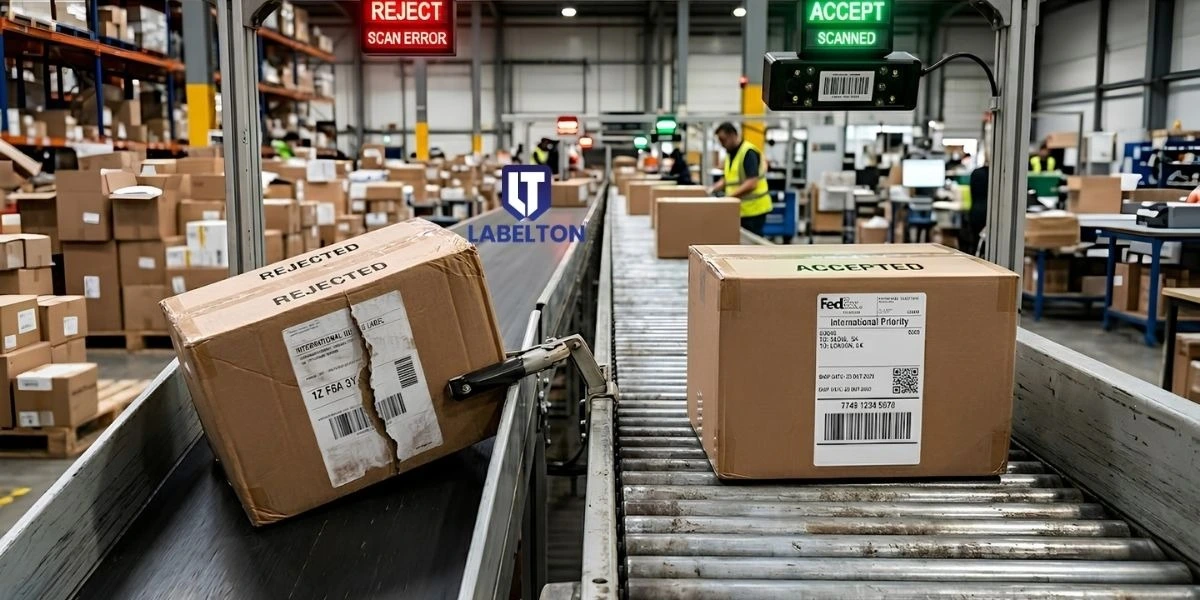
Unreadable labels create serious operational problems. A barcode that does not scan properly slows down warehouse systems and increases the risk of parcel rejection in international shipping. Incorrectly printed shipping details increase manual verification work, while customs authorities may also hold shipments if labels fail to meet scanning requirements.
For manufacturers, exporters, logistics companies, warehouse operators, industrial suppliers, and e-commerce businesses, parcel rejection creates unnecessary costs and delays. It affects customer trust and supply chain efficiency.
This is why industrial labeling solutions have become more important than ever. Labelton focuses on durable and application-based labeling systems that help businesses improve shipping accuracy and reduce operational issues during transportation.
Existing Problems in International Shipping
Shipping labels experience rough handling throughout the delivery cycle. Parcels move through conveyors, warehouses, trucks, airports, ports, and customs checkpoints. Labels remain exposed to dust, friction, humidity, temperature changes, and continuous handling.
Many businesses still use low-quality labels that fail under these conditions.
Common shipping label problems include:
• Smudged printing
• Faded barcode lines
• Poor adhesive strength
• Torn label corners
• Small font size
• Weak contrast between text and background
• Incorrect barcode placement
• Peeling labels during transportation
These problems directly affect scanning systems.
Modern logistics operations depend heavily on automation. Barcode scanners process thousands of parcels every hour. When a scanner fails to read a barcode, operations slow down immediately. Warehouse teams then shift to manual verification, which consumes additional time and manpower.
For international shipments, delays become even more expensive. Customs processing depends on accurate shipment identification. If the label cannot be scanned correctly, parcels may remain stuck for inspection or rejection.
Hidden Limitations Businesses Often Ignore
Many companies believe all labels perform similarly. This assumption creates long-term operational issues.
Low-cost labels may reduce immediate expenses, but they often fail during transportation. International shipping environments vary greatly. A shipment moving through humid coastal regions faces different challenges compared to one transported through cold storage or dry industrial areas.
Standard labels cannot always handle such conditions.
Another overlooked issue is printer quality. Even durable label materials may produce poor results if printers are not calibrated correctly. Weak ribbon quality, incorrect print settings, and low print resolution reduce barcode clarity, which can eventually lead to parcel rejection in international shipping operations.
Bulk shipping operations create additional pressure. Businesses dispatching large shipment volumes cannot manually inspect every package. If labels lack consistency, rejection risks increase across the entire supply chain.
This challenge becomes even more critical in industries such as pharmaceuticals, automotive components, electronics, industrial manufacturing, and retail exports where shipment accuracy directly affects operational efficiency. Businesses across multiple sectors are now adopting more durable and industry-specific labeling systems through specialized solutions offered under Industries Served by Labelton to improve shipping consistency and barcode performance.
Why Label Readability Matters
Shipping systems today rely on machine-based tracking.
Warehouses use barcode scanners for sorting. Logistics systems update shipment status automatically. Customs authorities scan labels for identification and clearance. Delivery teams use barcode verification during dispatch and final delivery.
Unreadable labels interrupt all these processes.
Poor readability affects:
• Tracking accuracy
• Delivery timelines
• Customs clearance speed
• Inventory management
• Warehouse efficiency
• Customer satisfaction
Even one failed barcode scan can create multiple operational delays.
Businesses often underestimate the cost of rejected parcels. Apart from transportation losses, companies also face customer complaints, replacement costs, delayed production schedules, and damaged business reputation.
This is why professional labeling solutions now play a major role in global logistics operations.
- Key Factors That Improve Label Readability
1.Select the Right Label Material
Different shipping environments require different label materials.
Paper labels may work for short-term indoor use, but industrial shipping often demands stronger materials. Durable labels resist moisture, abrasion, temperature variation, and surface friction, helping businesses reduce the risk of parcel rejection in international shipping.
Material selection should depend on actual transportation conditions.
Labelton provides industrial labeling solutions designed for demanding operational environments where long-lasting readability is necessary.
2.Maintain High Print Quality
Print quality directly affects barcode scanning performance.
Blurry edges, light printing, and uneven ink transfer reduce readability. Businesses should maintain proper printer calibration and regularly inspect print resolution settings.
Thermal transfer printing systems are widely preferred for industrial shipping because they produce sharp and long-lasting barcode outputs.
Proper ribbon selection also improves printing durability during long transportation cycles.
3.Focus on Barcode Design
Barcode size and spacing matter significantly.
Very small barcodes become difficult to scan quickly. Overcrowded information also reduces readability. Proper white space around the barcode improves scanning accuracy.
Businesses should always follow global barcode standards to maintain compatibility across different scanning systems and improve shipping accuracy. Industry guidelines provided by GS1 Barcode Standards help businesses improve barcode readability and scanning consistency across international logistics operations.
4.Ensure Correct Label Placement
Correct placement improves visibility and scanning performance.
Labels should remain flat and fully visible. Avoid placing labels near package edges, folds, seams, or damaged surfaces.
Curved or uneven surfaces often affect barcode readability during automated scanning.
5.Test Labels Before Dispatch
Testing helps businesses avoid large-scale shipping failures.
Labels should undergo scanning tests under actual transportation conditions. Exposure to heat, moisture, pressure, and handling should be checked before bulk dispatch operations begin.
Small testing processes prevent major shipment losses later.
Businesses handling large shipment volumes often require scalable production consistency as well. This is why many industrial exporters now focus on reliable bulk labeling systems like those discussed in How Labelton Handles Bulk Industrial Label Orders where operational consistency and durable barcode performance become essential for high-volume logistics operations.
6.Industry Environment Plays a Major Role
Different industries face different shipping challenges.
Pharmaceutical shipments often move through temperature-controlled logistics systems. Industrial equipment shipments experience rough handling. Retail products pass rapidly through automated sorting centers.
Each environment places unique pressure on label performance.
Competitor analysis across the industrial labeling market shows that businesses are shifting toward durable and customized labeling solutions instead of standard low-cost labels. Companies now focus more on barcode durability, adhesive strength, and environment-specific performance because shipment accuracy directly affects operational efficiency.
This shift reflects growing awareness regarding the true cost of parcel rejection and delayed shipping operations.
Parcel rejection due to low readability creates serious supply chain disruptions. A damaged barcode or faded shipping label can delay an entire shipment despite correct packaging and documentation.
International logistics now depend on fast and accurate scanning systems. Businesses can reduce rejection risks by selecting durable label materials, maintaining proper print quality, testing labels before dispatch, and using industrial-grade labeling solutions designed for demanding shipping environments.
Reliable labeling improves tracking accuracy, reduces manual intervention, lowers operational delays, and strengthens customer satisfaction.
A shipping label is not just a sticker on a parcel. It acts as the identity of the shipment throughout its journey. Labelton helps businesses improve international shipping reliability through durable industrial labeling solutions built for performance, readability, and operational consistency.