






Global shipping runs on visibility. Every package moves through warehouses, transportation hubs, customs checkpoints, and delivery centers before reaching its destination. Throughout this journey, barcode labels help logistics teams identify, track, sort, and manage shipments efficiently.
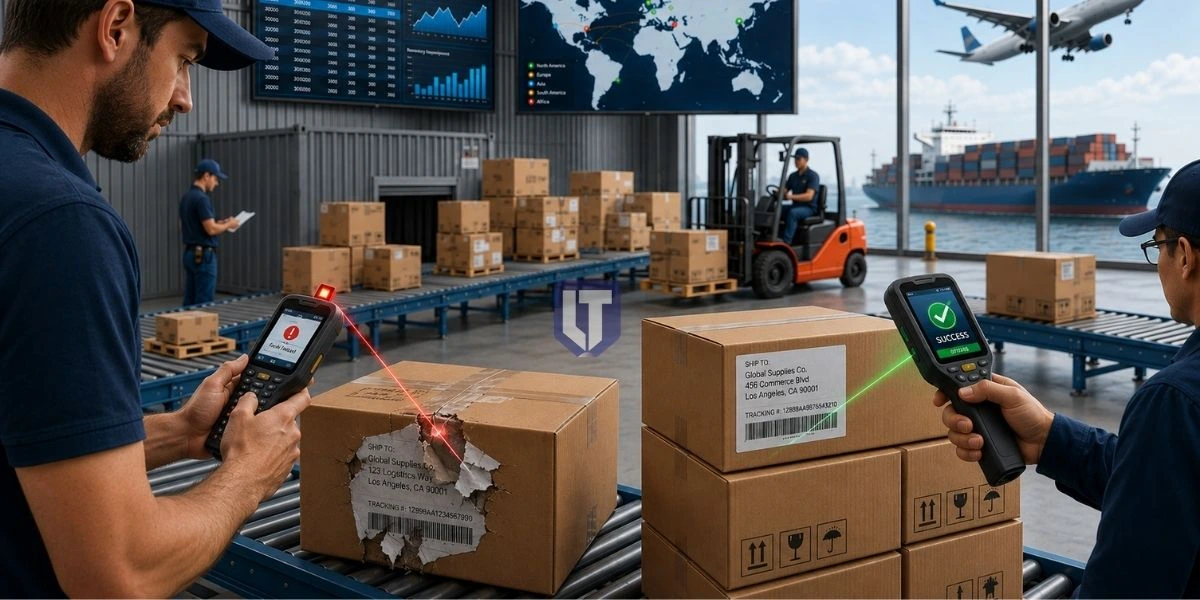
While businesses often focus on packaging strength and transportation planning, they sometimes overlook the role of barcode labels. A barcode that fails to scan can interrupt the entire shipping process. Delays, tracking errors, and additional handling costs often begin with a simple barcode Scanning Issue. In global logistics operations, preventing a barcode Scanning Issue is essential for maintaining shipment visibility, operational efficiency, and accurate tracking throughout the supply chain.
As supply chains become more automated, barcode readability becomes increasingly important. Businesses that invest in durable labeling solutions and understand the value of well-designed customized industrial labels are often better prepared to maintain shipping efficiency across global markets.
Why Barcode Reliability Matters In Modern Logistics
Global shipping runs on visibility. Every package moves through warehouses, transportation hubs, customs checkpoints, and delivery centers before reaching its destination. Throughout this journey, barcode labels help logistics teams identify, track, sort, and manage shipments efficiently.
While businesses often focus on packaging strength and transportation planning, they sometimes overlook the role of barcode labels. A barcode that fails to scan can interrupt the entire shipping process. Delays, tracking errors, and additional handling costs often begin with a barcode Scanning Issue.
Even a minor barcode Scanning Issue can create inefficiencies within the supply chain, affecting shipment visibility, inventory accuracy, and delivery performance. As global logistics networks become increasingly automated, maintaining barcode readability remains essential for ensuring smooth operations from origin to destination.
Barcode performance is critical across many sectors. From manufacturing and logistics to pharmaceuticals, chemicals, automotive, and consumer goods, different industries rely on labels that can withstand demanding operational environments.
Since labeling requirements vary based on application and industry standards, businesses can gain valuable insights by exploring the diverse industries served by industrial labeling solutions and understanding how durable labels support efficient product identification and tracking across different sectors.
Understanding What Causes Barcode Scanning Problems
Most barcode failures occur because labels encounter conditions they were not designed to handle. Understanding these causes helps businesses reduce the risk of a barcode Scanning Issue before products enter the supply chain.
Exposure To Harsh Shipping Environments
International shipments often travel through different climates and transportation conditions. During transit, packages may experience:
- Extreme temperatures
- Moisture and humidity
- Dust and dirt exposure
- Frequent handling
- Abrasion during transportation
These factors can affect both the label material and the printed barcode. Labels that fade, smear, or become damaged often result in scanning failures.
Working with an experienced industrial labels manufacturer such as can help businesses choose materials designed to maintain readability throughout the shipping journey.
Poor Print Quality
Barcode scanners rely on clear and precise patterns to capture information accurately.
If a barcode is printed with low resolution, uneven ink distribution, or inconsistent print density, scanners may struggle to interpret the data correctly. Even minor printing defects can lead to a barcode Scanning Issue, particularly in high-speed automated sorting systems where scan accuracy is critical.
Regular print quality inspections, equipment calibration, and routine maintenance help ensure consistent barcode output. By maintaining high print standards, businesses can reduce the risk of a barcode Scanning Issue and improve barcode readability throughout the shipping and distribution process.
Selecting Unsuitable Label Materials
Not all labels are built for global shipping environments.
Some materials perform well in controlled indoor conditions but fail when exposed to moisture, temperature fluctuations, or physical wear. Labels that peel, wrinkle, crack, or tear can compromise barcode readability and increase the risk of a barcode Scanning Issue during transit.
This challenge is especially common in industries that handle chemicals and hazardous materials. These products often travel through demanding storage and transportation conditions where label durability becomes critical. Businesses involved in such applications can benefit from understanding the requirements of chemical export labeling, where long-lasting readability and material performance play an important role in maintaining compliance and shipment traceability throughout the supply chain.
Building Barcode Reliability From The Start
Reliable barcode performance begins long before a package enters transit.
Businesses that focus on label quality during the planning stage often experience fewer shipping disruptions later. Selecting the right materials, printing methods, and label specifications from the start helps maintain barcode readability throughout the shipping journey. A proactive approach to label design can significantly reduce the likelihood of a barcode Scanning Issue and support smoother logistics operations across global supply chains.
Choose Materials That Match The Application
A barcode label should perform consistently from shipment origin to final delivery.
For global shipping applications, businesses commonly prioritize materials that offer:
- Strong adhesion
- Moisture resistance
- Abrasion resistance
- Temperature stability
- Long-lasting print retention
This process identifies potential problems before shipments leave the facility, reducing the chances of scanning failures later in the supply chain. Barcode verification also helps ensure compliance with globally recognized barcode quality standards established by GS1, the organization responsible for developing and maintaining barcode standards used across international supply chains. By validating barcode quality before distribution, businesses can improve scanning accuracy, minimize operational disruptions, and support reliable product traceability throughout the shipping process.
Follow Barcode Sizing Standards
Barcode dimensions directly affect readability and scanning accuracy throughout the supply chain.
A barcode that is too small may become difficult to scan, especially in fast-moving warehouse and distribution environments. On the other hand, oversized barcodes can create space constraints on packaging and may interfere with other important product information. Following established industry standards helps ensure compatibility across different scanning systems and reduces the risk of a barcode Scanning Issue.
Adequate spacing, often referred to as a quiet zone, around barcode symbols also improves scanner recognition and supports consistent performance across various logistics operations.
Focus On Printing Precision
High-quality printing creates sharp barcode edges and accurate line spacing. This improves scanner recognition and supports efficient movement throughout the supply chain.
Consistency becomes even more important for businesses managing large labeling requirements. Even minor variations in print quality can lead to scanning errors when labels are produced at scale. Companies that handle high-volume labeling programs often establish strict quality control processes to maintain barcode accuracy and print consistency across every batch. Understanding how manufacturers manage bulk industrial label orders can provide valuable insights into the systems and procedures that help ensure reliable barcode performance throughout large-scale production runs.
The Importance Of Correct Label Placement
Even the highest-quality barcode may fail if it is applied incorrectly.
Placement plays a major role in barcode accessibility throughout the shipping process. Labels positioned on folds, corners, seams, or curved surfaces often create scanning challenges because scanners may struggle to capture the barcode consistently. Improper placement can increase the likelihood of a barcode Scanning Issue, even when the barcode itself is printed correctly.
For better performance, barcode labels should be applied to:
- Flat surfaces
- Clean packaging areas
- Easily visible locations
- Stable application zones
Proper placement helps reduce barcode Scanning Issue occurrences and supports smoother logistics operations.
Why Barcode Verification Should Never Be Overlooked
Many organizations assume a barcode is ready for use immediately after printing. However, barcode verification provides an additional layer of quality assurance.
Verification helps evaluate:
- Barcode readability
- Print consistency
- Contrast levels
- Dimensional accuracy
This process identifies potential problems before shipments leave the facility, reducing the chances of scanning failures later in the supply chain. Barcode verification also helps ensure compliance with globally recognized barcode quality standards established byGS1, the organization responsible for developing and maintaining barcode standards used across international supply chains. By validating barcode quality before distribution, businesses can improve scanning accuracy, minimize operational disruptions, and support reliable product traceability throughout the shipping process.
Improving Barcode Contrast For Better Results
Contrast is one of the most important factors in barcode readability.
Scanners perform best when dark barcode elements appear against a light background. Strong contrast improves recognition speed, enhances scan accuracy, and minimizes the risk of a barcode Scanning Issue across different logistics and warehouse environments.
Businesses should also avoid placing graphics, logos, patterns, or excessive design elements near barcode areas. Visual interference can make it difficult for scanners to distinguish barcode symbols from the surrounding artwork. Keeping barcode zones clean, uncluttered, and highly visible helps maintain reliable scanning performance throughout the shipping process.
How Barcode Quality Supports International Shipping Success
A barcode Scanning Issue may appear small, but its impact can spread throughout the supply chain.
Poor barcode performance can contribute to:When barcode labels become difficult to scan, logistics providers may struggle to process shipment information accurately and efficiently. This can create bottlenecks within the transportation network and, in some situations, may even result in parcel rejections in international shipping. Understanding the connection between barcode readability and shipping performance helps businesses build stronger labeling strategies that support smooth global logistics operations.
Preparing For The Future Of Global Logistics
Supply chains continue to evolve as automation and advanced tracking technologies become standard across the logistics industry.
These systems depend on accurate barcode data. Businesses that prioritize durable materials, quality printing, barcode verification, and proper application methods position themselves for greater operational efficiency.
Reliable barcode labels do more than support shipment tracking. They improve visibility, reduce manual intervention, and help create stronger supply chain performance across international markets.
As logistics operations become increasingly complex, many organizations choose to work with an experienced industrial labels supplier that understands modern shipping challenges, compliance requirements, and application-specific labeling needs. The right labeling partner can help businesses implement solutions that support long-term barcode reliability and consistent supply chain performance.
With over 10 years of experience in label manufacturing, The Labelton helps businesses develop durable labeling solutions that support barcode readability, product identification, and reliable performance across demanding global shipping environments.