



When you place a bulk label order, every detail matters. An industrial label does much more than display a product name or barcode. It supports product identification, improves traceability, and helps maintain smooth operations throughout the supply chain.
However, not every label performs the same way. A label that works perfectly in one environment may fail in another.
Heat, moisture, chemicals, abrasion, and outdoor exposure all affect label performance.
That is why businesses should Evaluate Industrial Label Quality before placing a bulk order instead of making decisions based only on appearance or cost.
A proper evaluation helps reduce production risks, avoid unnecessary replacement costs, and improve long-term reliability. It also ensures that the selected label matches the product, application, and operating environment.
This guide explains the most important factors to consider before approving a bulk industrial label order.
Understand the Label Application
The first step to Evaluate Industrial Label Quality is understanding where and how the label will be used.
Every industry has different labeling requirements. A warehouse barcode label faces different challenges than a chemical container label or an electronics identification label. Surface type, environmental conditions, handling methods, and product life cycle all influence label performance.
Before selecting a label, consider questions such as:
- What surface will the label adhere to?
- Will the product remain indoors or outdoors?
- Will it be exposed to moisture, chemicals, or oil?
- Does the product experience frequent handling or abrasion?
- How long should the label remain readable?
Answering these questions helps determine the right label construction before production begins.
Check the Label Material
The material is one of the most important factors that determines label durability.
Paper labels are suitable for many indoor applications. However, industrial environments often require stronger materials such as polyester, polypropylene, or vinyl because they provide better resistance to tearing, moisture, chemicals, and extreme temperatures.
When you Evaluate Industrial Label Quality, choose the material according to the application instead of selecting it based only on price. A durable material helps maintain print quality and keeps the label intact throughout the product’s life.
Verify Adhesive Performance
A durable label still fails if the adhesive does not perform properly.
Industrial products use many different surfaces, including metal, plastic, painted components, glass, cartons, and textured materials. Each surface requires the appropriate adhesive for reliable bonding.
Before placing a bulk order, test adhesive performance under actual operating conditions. Surface texture, application temperature, storage conditions, moisture, and chemical exposure all influence adhesive strength. Businesses can also understand how weather conditions affect adhesive labels by reading, which explains why environmental conditions play a critical role in adhesive performance.
Testing adhesives early helps prevent peeling, lifting edges, and costly label failures.
Evaluate Print Quality
Clear printing is essential for product identification and operational efficiency.
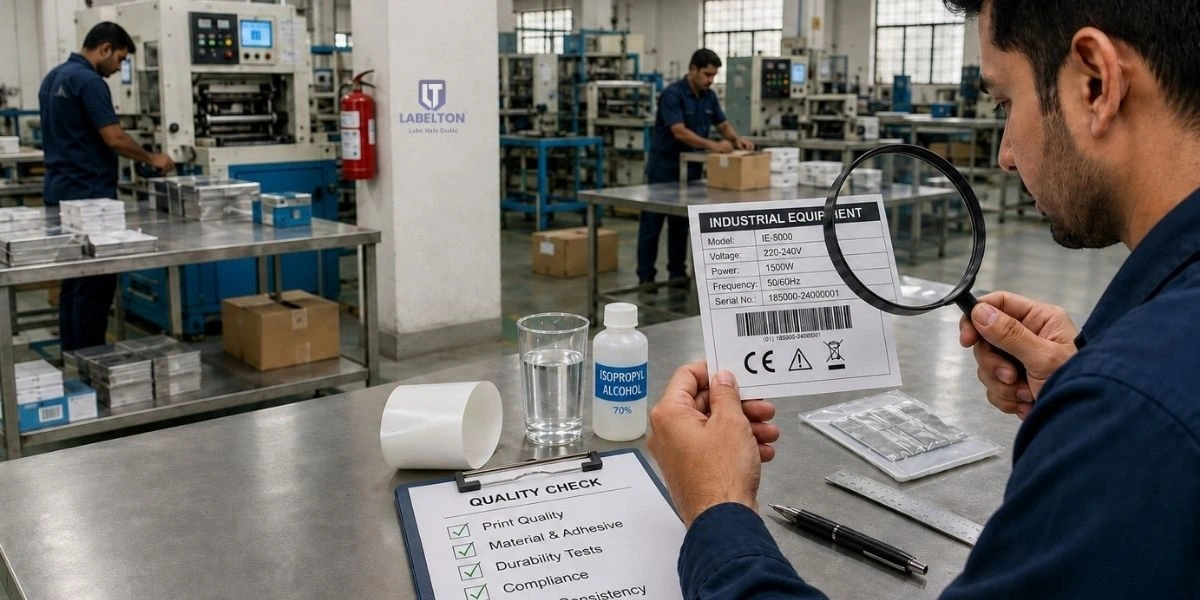
When you Evaluate Industrial Label Quality, inspect every printed element carefully.
Verify that:
- Text remains sharp and readable.
- Small fonts stay clear.
- Logos print accurately.
- Colors remain consistent.
- Barcodes are well defined.
- Variable information prints correctly.
Poor print quality often leads to scanning errors, misidentification, and unnecessary rework. Always request production samples before approving large quantities.
Test Barcode and QR Code Readability
Barcode performance directly affects inventory accuracy and supply chain efficiency.
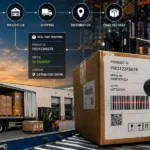
Every barcode and QR code should scan quickly and consistently throughout the product’s life cycle. Test labels after handling, transportation, storage, and environmental exposure to confirm reliable performance.
Understanding common barcode scanning issues in global shipping can also help identify potential risks before production begins.
Review Environmental Resistance
Industrial labels often operate in demanding environments.
Some products remain in refrigerated storage, while others are exposed to sunlight, chemicals, cleaning agents, moisture, or outdoor weather for extended periods.
Before approving production, Evaluate Industrial Label Quality by testing resistance against:
- Water
- UV exposure
- Heat
- Cold temperatures
- Chemicals
- Oil and grease
- Abrasion
Environmental testing confirms that labels continue performing long after installation instead of only during initial inspection.
Inspect the Label Finish
The label finish affects both durability and appearance.
Depending on the application, industrial labels may require:
- Matte finish
- Gloss finish
- Protective laminate
- Scratch-resistant coating
A protective finish helps preserve printed information while extending the label’s service life. Choose the finish according to functional requirements rather than appearance alone.
Confirm Dimensional Accuracy
Even small dimensional variations can interrupt automated labeling systems.
Before approving production, verify:
- Label dimensions
- Corner radius
- Die-cut accuracy
- Label spacing
- Roll winding consistency
Accurate dimensions improve application efficiency and reduce unnecessary production downtime.
Request Sample Testing Before Bulk Production
Never approve a bulk order without evaluating production samples.
Apply sample labels to the actual product and monitor their performance during storage, transportation, handling, cleaning, and daily operations.
If you are buying customised industrial labels for the first time, this guide provides additional insights into selecting the right solution.
Testing actual samples allows businesses to Evaluate Industrial Label Quality under real-world conditions before committing to full production.
Review Manufacturing Consistency
Consistency becomes even more important when production volumes increase.
Every batch should maintain the same print quality, adhesive performance, material specifications, and finishing standards. Understanding how bulk industrial label orders are handled also provides valuable insight into quality control and manufacturing consistency.
Reliable production processes help reduce variation and ensure dependable long-term performance.
Consider Industry Compliance
Many industries require labels to meet specific standards and regulatory requirements.
Depending on the application, labels may support:
- Product identification
- Safety instructions
- Asset tracking
- Compliance markings
- Warning labels
- Product traceability
When you Evaluate Label Quality, ensure the materials, printing process, and construction meet applicable industry requirements.
When you Evaluate Label Quality, ensure that the label materials, printing process, and overall construction meet the applicable industry requirements for your application. Following recognized industry practices also helps improve long-term reliability and compliance. For a better understanding of label durability, performance testing, and labeling standards, you can explore the resources available from UL Solutions, a globally recognized organization for product safety and performance standards.
Balance Cost With Long-Term Value
The least expensive label is not always the most cost-effective choice.
Labels that fail prematurely often increase operational costs through replacements, production delays, scanning failures, and customer complaints.
Instead of focusing only on purchase price, evaluate:
- Material durability
- Adhesive performance
- Print quality
- Expected service life
- Overall operational reliability
A high-performing label delivers greater long-term value while reducing maintenance and replacement costs.
Checklist to Evaluate Industrial Label Quality Before Bulk Order
Every successful industrial labeling project begins with careful planning.
When businesses evaluate Label Quality before placing a bulk order, they reduce operational risks and improve long-term product performance. Material selection, adhesive compatibility, print quality, environmental resistance, manufacturing consistency, and dimensional accuracy all contribute to reliable labeling solutions.
Testing samples, reviewing specifications, and validating production quality before ordering helps prevent costly issues later and ensures labels perform throughout the product lifecycle.
If you are planning a bulk industrial label project and need guidance on selecting the right materials, testing methods, or manufacturing specifications, The Labelton is here to help. With more than 30 years of label manufacturing experience, the team provides expert support to help businesses choose the right labeling solution for their specific application. To discuss your requirements, visit.