

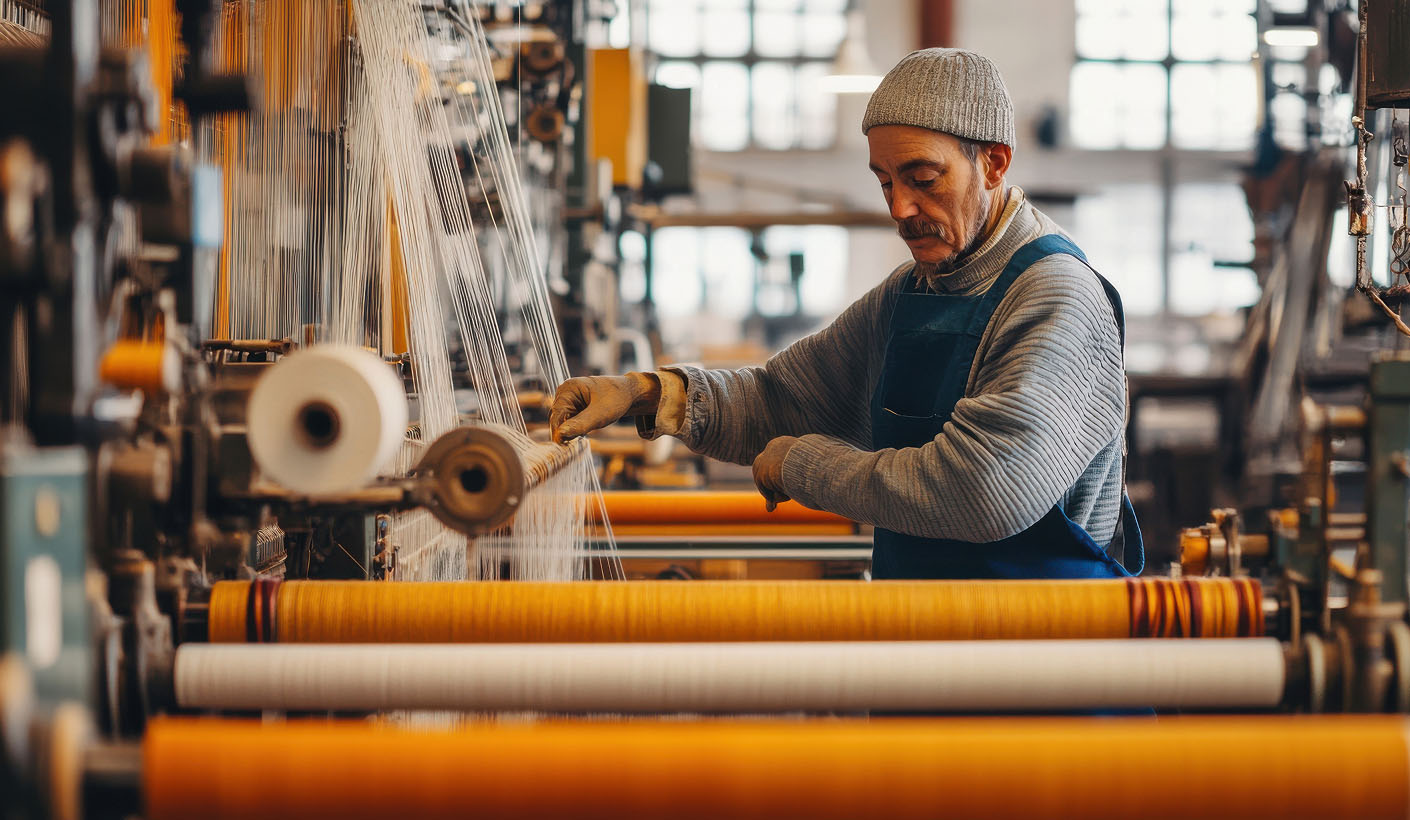



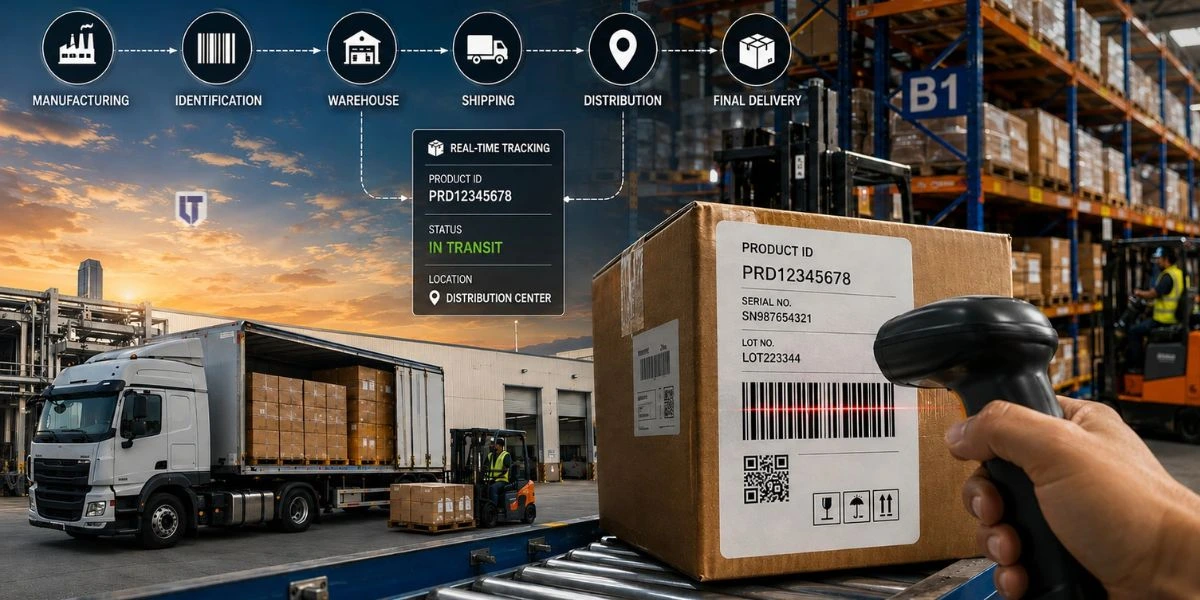
Products move through production, warehousing, transportation, and delivery. At every stage, businesses need reliable product identification and tracking.
Industrial Labels connect physical products with digital records through barcodes, QR codes, serial numbers, and batch data.
The ISO standard for product packaging labels covers machine-readable and human-readable label information used in applications such as inventory control and warehouse operations.
A well-made label supports faster scanning, accurate inventory, and better product traceability. Its material, adhesive, print quality, and durability also affect performance.
What Product Traceability Means in Manufacturing
Product traceability is the ability to follow a product through different stages of its lifecycle.
A traceability system connects product identification with production, inventory, logistics, and distribution records. Traceability involves identifying products and locations, capturing data at important supply chain events, and connecting physical and information flows.
For example, a manufacturer can assign a unique serial number or batch code to a product. That information can connect the physical item with production details, inspection records, inventory data, and shipment information.
The label becomes the physical identification point.
When the label is scanned, the connected system can retrieve the relevant information. This creates a clear link between the product and its digital record.
How Industrial Labels Support the Supply Chain
Traceability works effectively when product identification remains consistent from production to delivery.
Industrial Labels help maintain this consistency across different operational stages.
Manufacturing and Production
Manufacturing facilities handle large product volumes every day. Manual identification can take time and increase the risk of data-entry errors.
Barcode Labels and Product Identification Labels allow operators to identify products quickly. They can carry product codes, batch numbers, serial numbers, manufacturing dates, and other variable information.
Teams can scan these labels during production and quality checks. This helps connect products with specific batches, production lines, or inspection records.
If a quality issue occurs, teams can identify affected products more efficiently.

Warehouse Operations
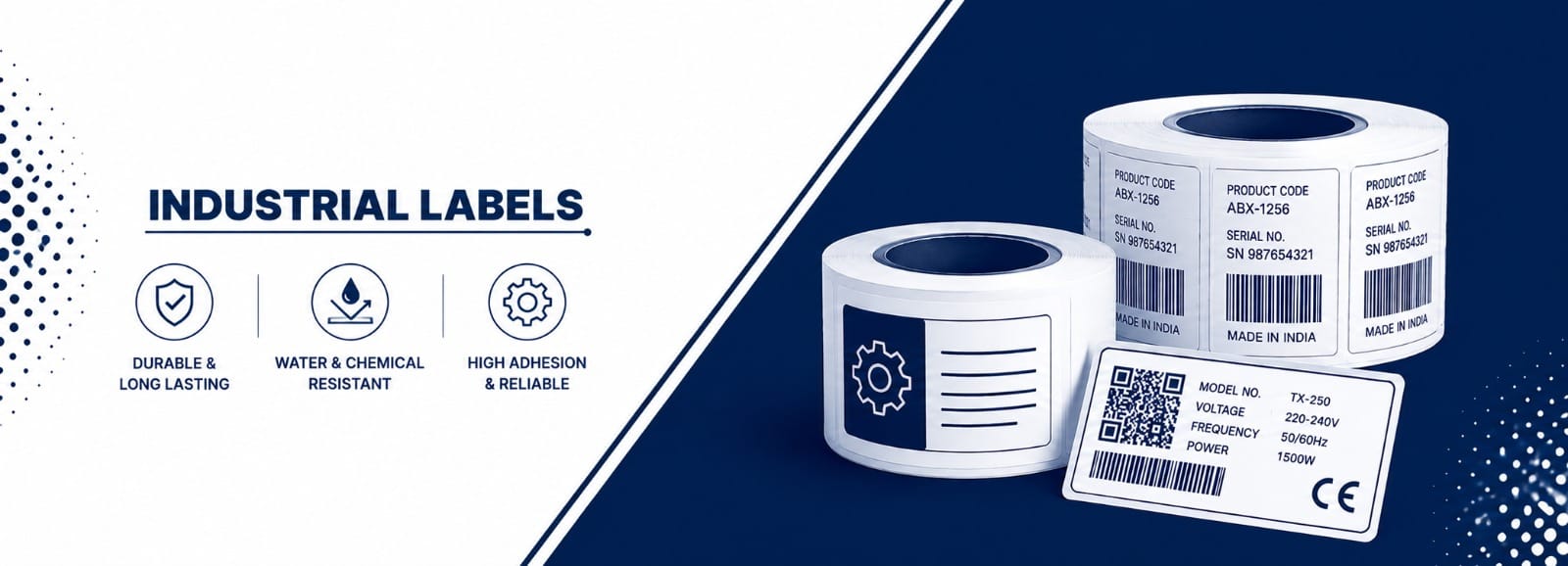
Warehouses rely on accurate product identification for receiving, storage, picking, and dispatch.
Incorrect or damaged labels can create inventory discrepancies. They can also result in misplaced products and picking errors.
Industrial Labels help teams identify cartons, pallets, bins, racks, and individual products. Barcode scanning reduces repetitive manual entry and supports faster stock movement.
Label durability also matters in warehouse environments. Products can face friction, dust, moisture, temperature changes, and frequent handling.
The label construction needs to match these conditions.
Logistics and Transportation
Products often pass through several logistics points before reaching their final destination.
Shipping Labels and logistics labels help connect packages with shipment numbers, order information, destination details, and tracking records.
A readable label supports faster scanning during sorting, loading, unloading, and dispatch.
The label also needs to remain attached during transportation. Exposure to moisture, friction, temperature changes, and rough handling can affect label performance.
This makes material and adhesive selection important for logistics applications.
Distribution and Delivery
The final stages of the supply chain also depend on accurate identification.
Distributors and delivery teams need to match products with orders and shipment records. A machine-readable label allows them to verify information quickly.
This becomes even more important when businesses process large shipment volumes.
Faster identification reduces manual checks and helps keep products moving through the supply chain.
Types of Industrial Labels Used for Traceability
Different traceability requirements call for different label solutions.
Barcode Labels
Barcode Labels provide machine-readable product identification. They can support inventory management, product tracking, warehouse operations, and logistics.
GS1 notes that barcodes can encode identifiers such as products, shipments, and locations, along with attributes such as serial numbers, batch numbers, and dates.
The barcode needs proper sizing, contrast, print quality, and placement for reliable scanning.
QR Code Labels
QR Code Labels can hold more data within a compact space. They can connect products with digital information, specifications, records, or other systems.
They can support applications where businesses need more information than a traditional linear barcode can provide.
Product Identification Labels
Product Identification Labels help businesses assign a clear identity to products and product groups.
They can include product codes, serial numbers, batch information, manufacturing details, and other required data.
Variable Data Labels
Variable Data Labels allow manufacturers to print unique information across a production run.
Each label can carry a different serial number, barcode, QR code, batch number, or product code.
This supports both unit-level and batch-level traceability.
Why Label Material Matters for Traceability
Barcode readability depends on more than the printed code.
The facestock, adhesive, coating, printing method, and application surface can all affect label performance.
Paper can suit controlled indoor applications where exposure to moisture, chemicals, and abrasion remains limited.
Polyester and other synthetic materials can suit more demanding applications where greater resistance is required.
The right choice depends on the product and its operating conditions. A useful comparison of paper and polyester labels for different industry requirements helps show why material selection should start with the application rather than price alone.
Adhesive selection also matters. A label applied to cardboard may require a different adhesive construction from one applied to metal, plastic, glass, or textured surfaces.
For products exposed to changing weather or moisture, environmental conditions can also affect adhesive performance. Label selection needs to account for those conditions before production begins.
How Barcode Quality Affects Product Traceability
A barcode only supports traceability when scanners can read it consistently.
Low contrast, poor print density, incorrect dimensions, damaged surfaces, and unsuitable printing settings can cause scanning problems.
Print quality needs to remain consistent across production batches.
Quality inspection also plays an important role. Automated inspection technologies can help identify print defects, missing information, registration problems, and other label quality issues before products enter the supply chain.
Modern approaches to AI label inspection and quality control can further support consistent production by detecting defects during the manufacturing process.
This is particularly valuable for high-volume label production.
How Industrial Labels Reduce Supply Chain Errors
Manual product identification creates more opportunities for mistakes.
A long product code can be entered incorrectly. Similar products can be confused. A shipment can also be associated with the wrong order.
Scanning reduces these risks.
A barcode or QR code allows teams to capture product information directly. This saves time and reduces repetitive data entry.
Traceability also becomes valuable when a product issue occurs.
For example, a manufacturer can use batch or serial information to identify specific products instead of reviewing an entire inventory.
This helps teams isolate affected products faster.
It can also reduce unnecessary product movement and support more controlled recall or corrective-action processes.
How to Choose Industrial Labels for Your Application
The right label starts with the application.
Manufacturers should evaluate several factors before selecting a label specification.
Product Surface
Consider whether the label is applied to cardboard, plastic, metal, glass, or another surface.
The adhesive needs to provide reliable contact with that surface.
Environmental Conditions
Consider exposure to moisture, chemicals, heat, cold, sunlight, dust, and abrasion.
Weather and humidity can influence both label materials and adhesive performance. Selecting labels based on actual operating conditions helps reduce peeling, fading, and readability issues.
Expected Lifespan
A temporary shipping label has different requirements from a product identification label that needs to remain readable for several years.
The required lifespan should influence the facestock, adhesive, coating, and printing method.
Printing Technology
Thermal transfer, direct thermal, and other printing methods have different material requirements.
The label should match the printer and the required level of print durability.
Scanning Requirements
Barcode size, contrast, placement, print density, and surface quality all influence scanning.
A label should provide enough space for the required barcode and supporting information without compromising readability.
Why Customized Label Specifications Matter
Standard labels may not always suit every product.
Manufacturers often need specific dimensions, materials, adhesives, coatings, printing methods, or variable data formats.
A customized specification can address the actual operating environment instead of forcing the product into a standard label format.
Before placing a large order, businesses should evaluate factors such as label dimensions, surface compatibility, adhesive performance, material durability, printing requirements, and expected usage.
These considerations are covered in the buying of customized industrial labels.
This application-based approach helps reduce the risk of selecting a label that looks suitable but fails during actual use.
Why Consistent Label Manufacturing Matters
Traceability depends on consistency.
A business may use thousands or millions of labels across its operations. Variations in dimensions, print quality, adhesive performance, or material can create problems across large production runs.
A reliable manufacturer needs controlled processes for material sourcing, printing, finishing, inspection, and final quality checks.
This becomes especially important for businesses that require recurring bulk quantities.
Consistent production helps maintain the same label performance from one batch to another. It also supports smoother procurement and production planning.
For businesses handling large quantities, bulk industrial label order management also becomes an important part of supply continuity.
Industrial Labels Connect Physical Products With Digital Data
Modern supply chains depend on accurate data.
The physical product needs to connect with information stored in inventory, production, warehouse, and logistics systems.
Industrial Labels create that physical connection.
A barcode can link a product with its inventory record. A QR code can connect users with digital information. A serial number can identify one specific unit. A batch number can connect multiple products with a common production record.
This makes the label an operational part of the traceability system.
The label does not replace the digital system. It helps the system identify the physical product correctly.
Traceability Requirements Vary by Industry
Different industries place different demands on product identification.
Manufacturing operations may prioritize process tracking and inventory control. Logistics businesses may focus on shipment identification and scanning speed. Pharmaceutical applications may require precise product and batch identification.
FMCG, retail, e-commerce, chemicals, automotive, textiles, and other sectors can also have different requirements for material, durability, printing, and compliance.
The label specification should therefore match the product and its operating environment.
Industrial labeling solutions show why one label construction cannot meet every application.
The Role of Industrial Labels in Traceability
Product traceability depends on reliable identification at every stage of the supply chain.
From manufacturing and quality control to warehousing, transportation, and distribution, Industrial Labels help connect physical products with accurate digital information.
The right barcode, QR code, serial number, or batch label improves identification and scanning. The right material and adhesive help protect that information throughout the required product lifecycle.
For product-based businesses, label selection should therefore be treated as an operational decision.
It can affect inventory accuracy, warehouse efficiency, shipment visibility, scanning performance, and response time when product issues occur.
A strong labeling solution starts with the application. Businesses need to evaluate the product surface, environment, lifespan, printing method, adhesive, barcode requirements, and expected production volume before finalizing the specification.
This approach creates more reliable product identification and supports better traceability across the supply chain.
Choose Industrial Labels Built for Reliable Traceability
Reliable traceability starts with reliable product identification.
For businesses that require application-specific materials, consistent print quality, durable adhesives, customized specifications, and dependable supply, industrial label manufacturing expertise can make a direct difference to operational performance.
Connect with The Labelton for Industrial Labels designed around your product surface, operating environment, printing method, traceability requirements, and production volume.