




An adhesive label does more than display product information. It needs to stay attached to the product and remain readable throughout its intended use. The surface plays a major role in this performance.
Cardboard, plastic, glass, metal, wood, and coated surfaces all have different properties. Each surface creates a different labeling challenge. The same adhesive may perform well on one material and fail on another.
The right Adhesive Label combines the correct face material, adhesive, and construction for the application. Manufacturers also need to consider temperature, moisture, chemicals, surface texture, and application conditions.
A practical approach starts with the surface and ends with performance testing. This guide explains how to select the right label for different surfaces and avoid common adhesion problems.
Understand the Surface Before Choosing a Label
Surface condition directly affects adhesive performance. A clean and dry surface usually provides better contact. Dust, oil, moisture, coatings, and loose particles can reduce the bond.
Surface energy also matters. High-surface-energy materials allow many adhesives to spread and bond more easily. Low-surface-energy plastics can require specialised adhesive formulations.
Surface shape also affects performance. Flat surfaces are generally easier to label than curved or irregular surfaces. Flexible products can create additional stress on the label.
Start by identifying the exact surface material. Then consider its condition, shape, and environment. This gives you a better foundation for selecting an Adhesive Label.
Finding the Right Labels for Cardboard Packaging
Cardboard and corrugated boxes are widely used for packaging, shipping, and warehouse operations. These surfaces are often porous and slightly uneven.
Paper labels work well for many general packaging applications. They support product information, shipping details, inventory data, and barcodes.
However, cardboard can contain dust and loose fibers. Humidity can also affect paper labels and their adhesive performance.
For shipping and warehouse applications, choose an Adhesive Label that provides reliable bonding during handling and transportation. If the package faces moisture or rough conditions, consider a more durable label construction.
For tracking and inventory applications, barcode labels in India also need strong print quality. Clear barcodes help support accurate scanning throughout the supply chain.
Getting Reliable Adhesion on Plastic
Plastic is common in bottles, containers, packaging, electronics, and industrial products. Different plastic types can create different adhesion challenges.
Materials such as polyethylene and polypropylene have low surface energy. Standard adhesives may not create the required bond on these surfaces.
Product flexibility also matters. A squeesable container puts more stress on the label than a rigid plastic box. Repeated bending can cause lifting around the edges.
Choose an adhesive based on the specific plastic type and product design. Test the label on the actual surface before starting large-scale production.
A suitable Adhesive Label should remain attached even when the product flexes during normal handling and use.
Preventing Label Failure on Glass
Glass offers a smooth surface and often provides good adhesive contact. However, moisture and condensation can create problems.
Beverage bottles, food containers, and refrigerated products often experience condensation. Applying a label to a wet or very cold surface can affect the initial bond.
Consider both the application temperature and the product’s storage conditions. The adhesive needs to perform within the expected temperature range.
The face material also affects the final result. Paper, film, and clear materials can provide different levels of appearance and durability.
For products that face moisture, select an Adhesive Label that maintains its bond and appearance throughout the required application.
Building Durable Labels for Metal Surfaces
Metal surfaces are common in machinery, tools, appliances, containers, and industrial components. These applications often require higher durability.
Labels may face oil, abrasion, chemicals, heat, cold, or repeated handling. Metal surfaces can also contain coatings or manufacturing residue that affects adhesion.
Before applying a label, identify whether the metal is bare, painted, powder-coated, or otherwise treated. Each surface can require a different adhesive approach.
Industrial identification labels also need to remain readable. Product numbers, serial numbers, safety information, and other important data should stay visible throughout the product’s use.
A durable Adhesive Label helps manufacturers maintain reliable identification in demanding environments.
Tackling Rough and Textured Materials
Rough and textured surfaces create another adhesion challenge. The adhesive may not make full contact with the surface.
Examples include unfinished wood, textured plastics, industrial materials, and uneven coated surfaces.
Flexible label materials can help the label conform to uneven areas. The adhesive also needs to provide sufficient contact across the available surface.
Pay close attention to the label edges. Edge lifting often appears when the label does not conform properly to the surface.
Always test an Adhesive Label on the actual product before finalising the specification. A small application test can identify problems before they affect production.
Keeping Labels Secure on Curved Products
Curved surfaces require careful consideration. Bottles, tubes, pipes, cables, and containers may need labels that follow tight curves.
A stiff label can resist the shape of the product. This can create lifting, flagging, or poor surface contact.
Label dimensions also matter. A large label wrapped around a small diameter creates more stress than a smaller label on a wider curve.
Select a flexible material and adhesive combination that supports the product shape. Test the complete label construction on the actual product to confirm performance.
Protecting Labels From Temperature and Moisture
Temperature affects adhesive behavior. An adhesive that performs well at room temperature may behave differently in cold or high-temperature conditions.
Application temperature is especially important. The adhesive needs to make proper contact when the label is applied.
Operating temperature also matters. Products can move between production areas, warehouses, delivery vehicles, refrigerators, and outdoor environments.
Moisture creates another challenge. Humidity, condensation, water, and washing can affect both the adhesive and label material.
Choose an Adhesive Label according to the complete environmental range rather than normal room conditions alone.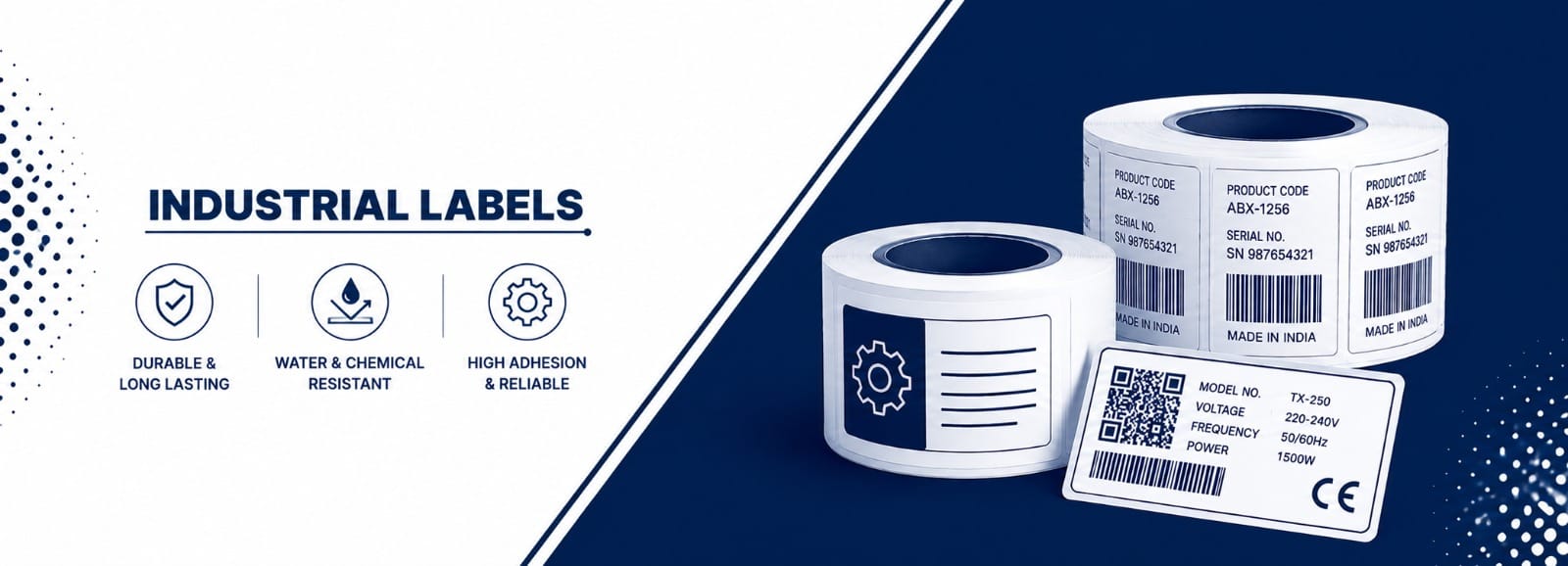
Match the Adhesive With the Application
Adhesive selection is one of the most important parts of label construction.
Permanent adhesives suit applications where the label needs to remain attached for the intended product life. Removable adhesives suit applications where the label needs to be removed with minimal residue.
Specialised adhesive systems can support difficult surfaces and demanding environments.
Do not judge adhesive performance only by initial tack. The adhesive also needs to develop a strong bond over time.
The correct choice depends on the surface, application temperature, product material, expected label life, and operating conditions.
Selecting a Face Material for Long-Term Performance
The face material affects durability, flexibility, appearance, and print quality.
Paper supports many general packaging and identification applications. Film materials provide better resistance to moisture, abrasion, and demanding environments.
The printing requirement also affects material selection. Barcodes, variable information, product details, and graphics need to remain clear throughout the label’s intended life.
For demanding applications, select a face material that matches the environment instead of choosing only by appearance or cost.
Test Before Full Production
Testing helps prevent expensive labeling problems.
Apply sample labels to the actual product surface. Allow them to remain under expected conditions. Check for peeling, edge lifting, bubbling, residue, print damage, and loss of readability.
If the product faces moisture, chemicals, abrasion, or temperature changes, include those conditions in testing.
Testing the complete label construction gives manufacturers a better understanding of real-world performance. It also helps identify whether the adhesive, face material, or application process needs adjustment.
Work With the Right Label Manufacturer
A successful labeling solution depends on more than selecting a standard label size. Manufacturers need to consider the complete application.
A specialised label manufacturer in India can help businesses evaluate the surface, adhesive requirements, face material, printing needs, and operating environment before finalising the label specification.
This approach is especially useful for industrial and commercial applications where label failure can affect identification, tracking, packaging, or production.
Choose the Right Adhesive Label for Every Surface
Every surface creates a different labeling requirement. Cardboard can require strong bonding on porous fibers. Plastic may require specialised adhesion. Glass can face condensation. Metal may need resistance to chemicals and abrasion. Rough and curved surfaces require better conformity.
The right Adhesive Label brings these factors together. The adhesive, face material, surface, and application process must work as one system.
Do not choose a label only because it sticks during the first few minutes. Choose it based on how it performs throughout the product’s actual life.
For reliable labeling solutions, work with The Labelton to match the label construction to your product and operating conditions.
Discuss your surface, application process, durability requirements, and printing needs to develop a label solution that supports strong adhesion and clear product identification.
Contact The Labelton to get the right adhesive label solution for your application.