




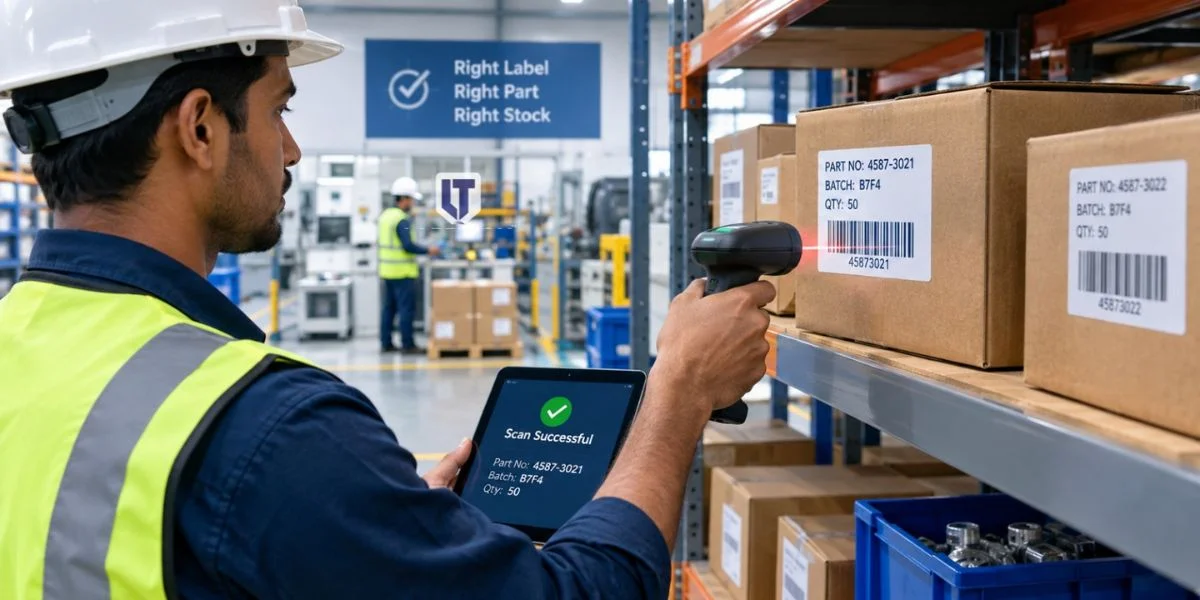
Inventory accuracy plays a major role in manufacturing efficiency. Every raw material, component, work-in-progress item, and finished product must be correctly identified and tracked.
A single identification mistake can result in the wrong part entering production, misplaced stock, incorrect inventory records, or even shipment errors.
Standardized barcode identification also helps manufacturers maintain consistent product identification and tracking across different stages of the operation.
This is where industrial labels become essential. They provide products, components, containers, and storage locations with clear identification.
When combined with barcode or QR-code technology, they help employees verify items quickly and connect physical inventory with digital records.
However, the effectiveness of a label depends on more than the information printed on it.
The label material, adhesive, printing method, and application environment all influence how long the identification remains readable and attached.
A label needs to remain readable in the environment where it is used. Heat, moisture, chemicals, oil, friction, and frequent handling can affect label performance.
For manufacturers, a reliable labeling system can reduce manual errors, improve traceability, and keep materials moving efficiently from receiving to production and shipment.
How Inventory Errors Affect Manufacturing
Manufacturing facilities often handle thousands of components and materials. Many of these items can look almost identical while having different specifications, part numbers, or applications.
Without clear identification, employees may select the wrong component, place materials in the wrong location, or record incorrect quantities.
Common inventory errors include:
- Incorrect part selection
- Misplaced stock
- Wrong quantity records
- Incorrect material identification
- Picking mistakes
- Shipment errors
- Delays during inventory checks
These mistakes can increase labour costs and disrupt production schedules. Employees may need to spend additional time searching for materials, checking records, or correcting inventory discrepancies.
Industrial labels provide a consistent identification system. A clearly labelled component, bin, pallet, or rack allows workers to verify information quickly before moving or using an item.
Industrial Labels Improve Product Identification
Every component needs a reliable way to communicate what it is and where it belongs. Industrial labels provide important information in a clear format.
Depending on the application, manufacturers can include:
- Part numbers
- Product names
- Batch numbers
- Serial numbers
- Barcodes
- QR codes
- Storage locations
- Safety information
- Handling instructions
This information helps employees distinguish between similar products without relying solely on memory or manual records.
For example, two components may have similar shapes but different specifications. A clearly printed part number and barcode allow an employee to confirm the correct component before sending it to the production line.
The label must also remain readable throughout its intended use. Fading, tearing, smudging, or peeling can make even accurate information difficult to use.
Durable Labels Help Prevent Identification Failures
Manufacturing environments can be demanding. Labels may be exposed to dust, oil, moisture, chemicals, heat, abrasion, and repeated handling.
A label that works well in a clean indoor warehouse may not perform effectively on a machine exposed to oil or heat. If the label becomes damaged, employees may struggle to identify the item accurately.
Choosing the appropriate label construction for the application helps reduce these failures.
Manufacturers should consider:
- Surface type
- Temperature exposure
- Moisture and humidity
- Chemical or oil contact
- Abrasion and friction
- Expected service life
- Frequency of handling
For example, a label placed on a frequently handled metal component may require stronger adhesion and durability than a temporary warehouse location label.
Barcode Labels Make Inventory Tracking Faster
Manual data entry creates opportunities for mistakes. An employee may enter an incorrect part number, select the wrong item from a system, or record the wrong quantity.
Barcode labels can reduce these risks by allowing employees to scan information directly.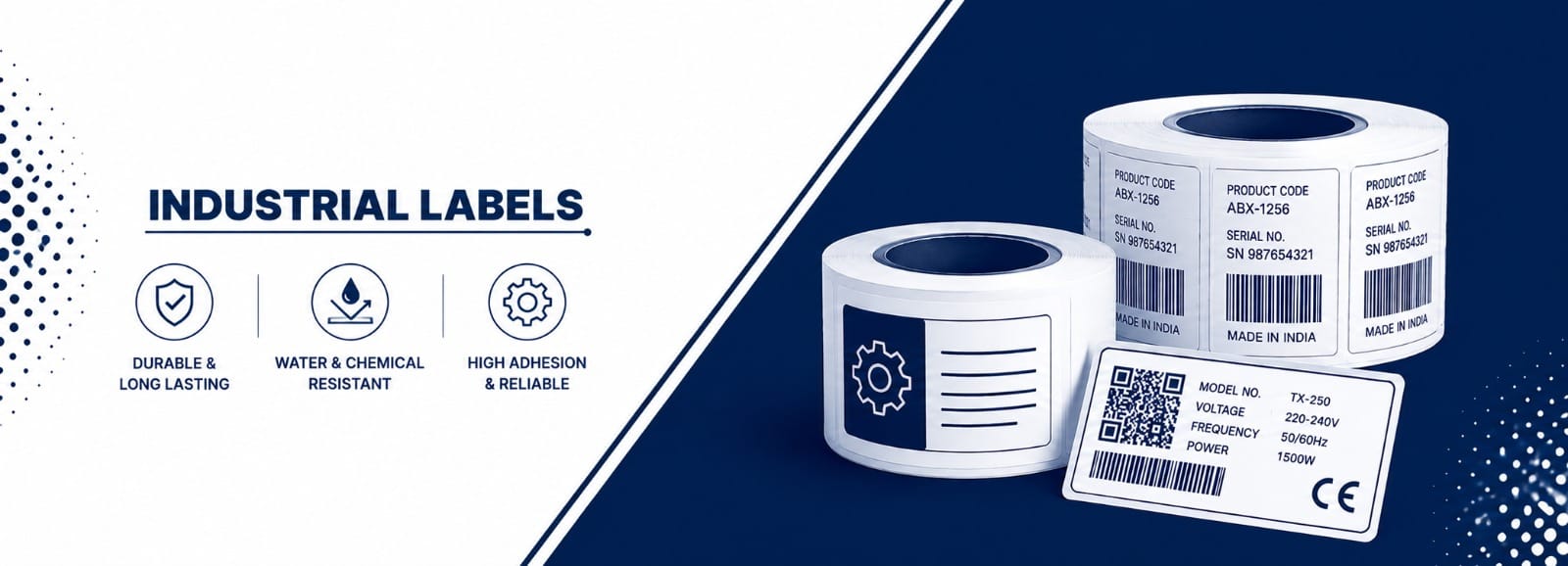
A barcode connects the physical item with its digital inventory record. This makes it easier to verify products and update information during key processes such as:
- Material receiving
- Stock placement
- Production
- Inventory checks
- Order picking
- Packing
- Shipping
For example, when a component arrives at a manufacturing facility, an employee can scan its barcode and record the item in the inventory system. When the same component moves to production, another scan can update its location or status.
This creates a more consistent flow of information while reducing unnecessary manual entry.
Barcode performance also depends on print quality and the label surface. The material and printing method should support clear scanning throughout the label’s intended service life.
QR-code labels can provide additional information when workers need access to specifications, instructions, maintenance records, or tracking information.
Inventory does not remain in one location. Materials can move from receiving areas to warehouses, production lines, quality control, and shipping departments.
Every movement creates another opportunity for an item to be misplaced or incorrectly recorded.
Labels on bins, pallets, containers, racks, and components provide clear visual references throughout the facility. Location labels can also help employees return materials to the correct storage area.
For example, a pallet containing multiple components can be identified with a barcode and location reference. Employees can scan the pallet when it enters storage and again when it moves to production.
This creates better visibility of where inventory is located and reduces unnecessary searching.
Choosing the Right Label Material Improves Accuracy
Different manufacturing applications require different label constructions. A label used inside a dry warehouse may have different requirements from one applied to machinery, outdoor containers, or components exposed to chemicals.
The surface also matters. Metal, plastic, glass, painted surfaces, and textured materials may require different adhesive solutions.
Manufacturers should therefore evaluate both the label material and adhesive before selecting an industrial label.
The right combination helps prevent common failures such as:
- Peeling
- Fading
- Smudging
- Tearing
- Poor adhesion
- Unreadable barcodes
A label that remains attached and readable for the required period supports consistent identification from production through shipment.
Custom Industrial Labels Fit Specific Manufacturing Needs
Manufacturing operations often have unique labeling requirements. A standard label may not provide the required dimensions, adhesive strength, material, barcode format, or printing specifications.
Custom industrial labels provide greater flexibility.
Manufacturers can select specifications based on the application, including:
- Label size and shape
- Material
- Adhesive
- Printing format
- Barcode or QR-code type
- Information layout
- Required durability
Customisation can also help standardise identification across departments. When receiving, warehouse, production, quality, and shipping teams follow the same labeling system, employees can understand and process inventory more consistently.
How Industrial Labels Support Traceability
The role of industrial labels extends beyond basic stock identification. They can support production tracking, asset identification, quality control, warehouse organisation, and shipping accuracy.
For example, a component label can connect a physical part with its batch or production information. This can make it easier to identify where a component came from and where it has been used.
Similarly, a finished-product label can help employees verify the correct product before it leaves the facility.
This connection between physical products and digital records can improve visibility throughout the supply chain.
How to Choose Labels for Your Manufacturing Environment
The best industrial label is not necessarily the most expensive or most durable option. It is the one that matches the actual application.
Before selecting a label, manufacturers should evaluate:
- Where the label will be applied
- What surface it will be attached to
- How long it needs to remain in use
- What temperatures it will experience
- Whether it will contact chemicals, oil, or moisture
- How frequently it will be handled
- Whether barcode scanning is required
- Whether it will be used indoors or outdoors
These factors help determine the right Label Material and adhesive combination.
Making the right choice at the beginning can reduce label failures and help maintain reliable product identification throughout the manufacturing process.
Build a More Accurate Inventory System
Inventory errors can lead to production delays, additional labour, misplaced stock, and shipment problems. A well-planned labeling system provides a practical way to reduce these risks.
Industrial labels help employees identify products faster, verify inventory, track material movement, and maintain clearer storage systems. Barcode and QR-code technology can further connect physical items with digital inventory records.
The key is to select labels based on the actual working environment. The right combination of material, adhesive, printing, and identification technology can help labels remain readable and attached throughout their required use.
Need labels for components, bins, pallets, machinery, or finished products? The Labelton can help you select the appropriate material, adhesive, size, and printing format for your manufacturing environment.