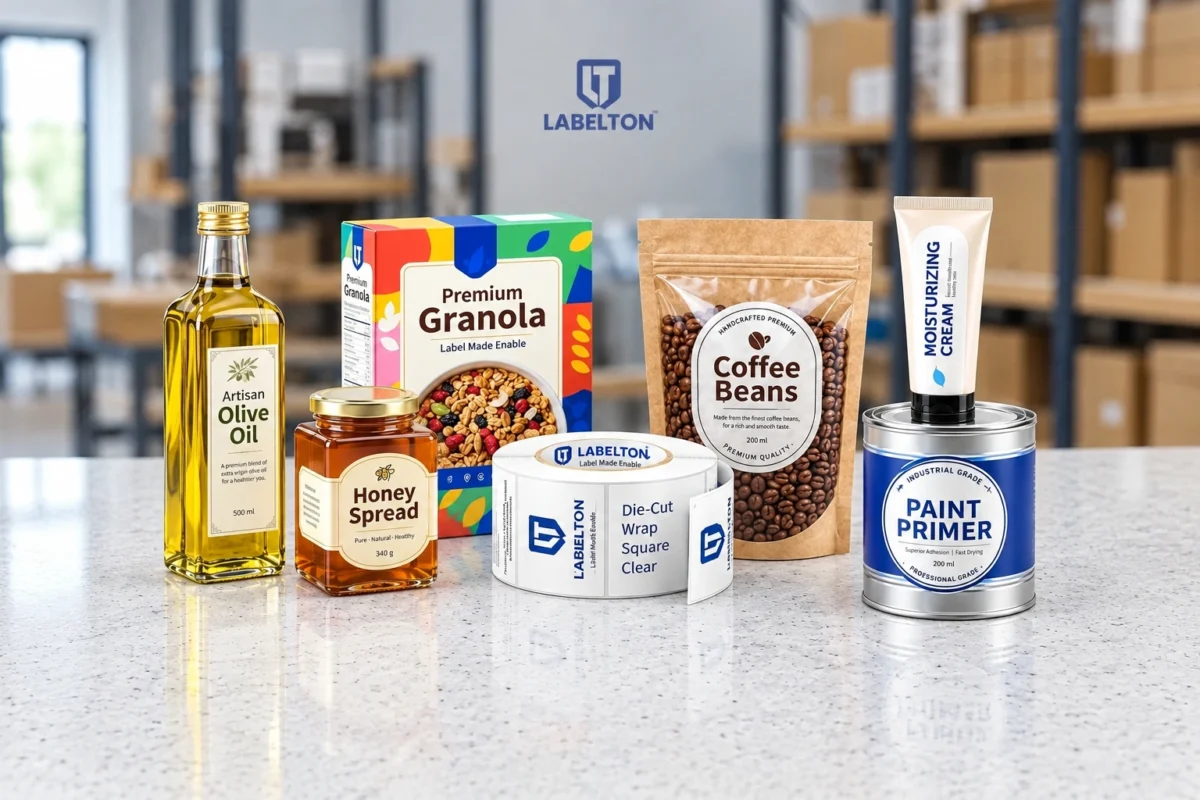




Selecting the right label material is more important than many businesses realize. A label is not just a product identifier.
It carries important information, supports barcode scanning, ensures compliance, and helps products move smoothly through the supply chain.
If the material does not match the application, labels may tear, fade, peel, or become unreadable before they reach the end user.
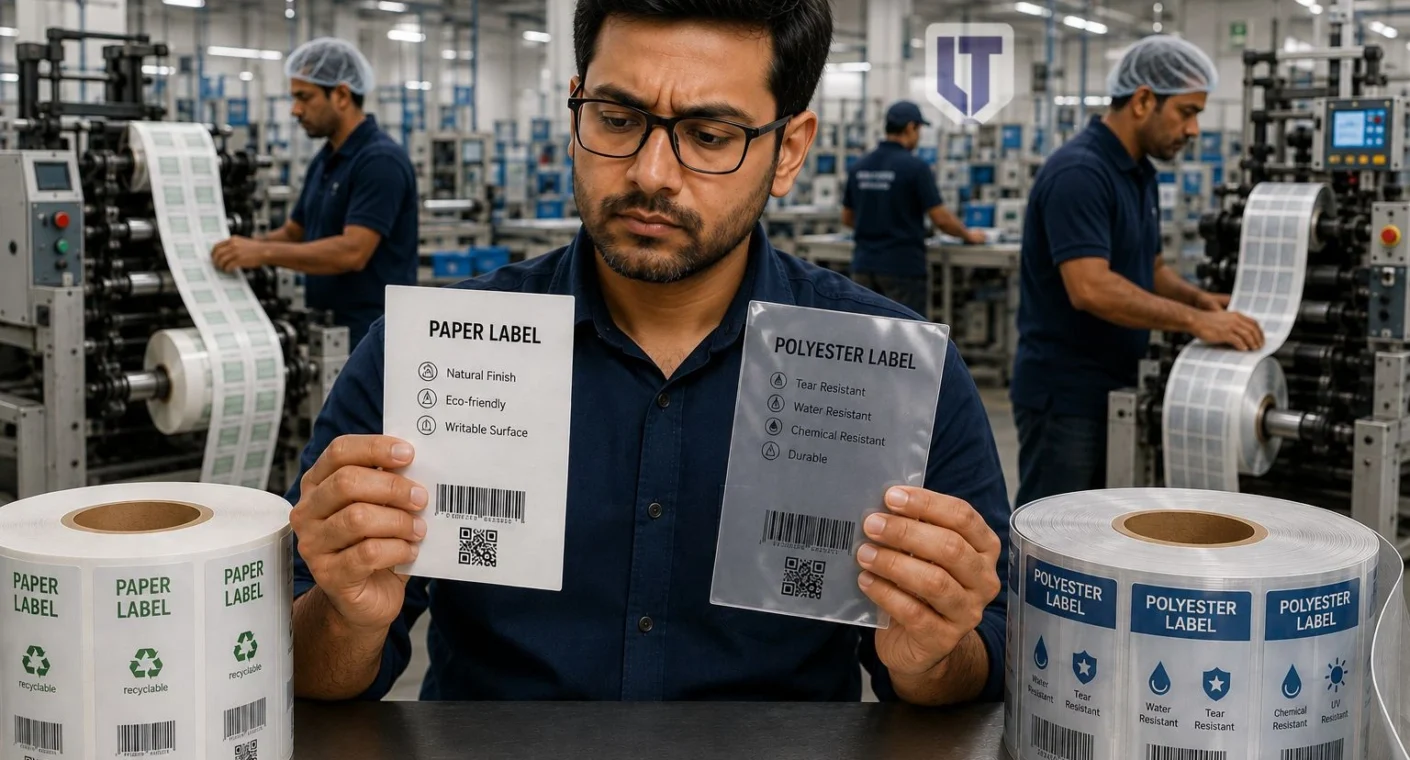
This is why businesses often compare Paper Labels and Polyester Labels before placing a bulk order.
While both materials perform well in specific applications, they serve different purposes.
The right choice depends on the product environment, expected lifespan, handling conditions, and industry requirements.
Understanding how to evaluate industrial label quality before placing a bulk order helps businesses choose materials that deliver reliable performance and long-term value.
Whether the application involves retail packaging or industrial asset tracking, selecting the right label material prevents unnecessary replacements and operational delays.
This guide explains the differences between Paper Labels and Polyester Labels, their advantages, ideal applications, and the key factors every manufacturer should consider before making a decision.
Why the Right Label Material Makes a Difference
Every label experiences different conditions during its lifecycle. Some remain inside retail stores, while others travel through warehouses, manufacturing plants, transportation networks, or outdoor environments.
During this journey, labels encounter moisture, heat, friction, chemicals, and regular handling.
These conditions directly affect label performance. Businesses that overlook these factors often face barcode failures, damaged labels, and additional replacement costs.
Environmental exposure is one of the biggest reasons weather conditions affect adhesive labels, especially during storage and transportation.
Selecting the right material from the beginning improves product identification, operational efficiency, and customer satisfaction.
Understanding Paper Labels
Paper labels remain one of the most commonly used labeling solutions across multiple industries.
They are available in coated and uncoated finishes and produce excellent print quality for text, graphics, and barcodes.
Paper labels work best in applications where products remain indoors and face limited environmental exposure.
Benefits of Paper Labels
- Cost-effective for high-volume production
- Excellent print clarity
- Supports thermal transfer and direct thermal printing
- Ideal for retail and logistics applications
- Available in multiple finishes
Best Applications
Paper labels are widely used for
- Retail products
- Shipping labels
- Product packaging
- Food labels
- Warehouse identification
- Price tags
Although paper labels provide excellent printing results, they offer limited resistance to water, chemicals, and rough handling.
Understanding Polyester Labels
Polyester labels are manufactured from durable synthetic film designed for demanding industrial environments.
They provide outstanding resistance against moisture, abrasion, chemicals, oils, and UV exposure.
Unlike paper, polyester does not tear easily. It maintains readability even after prolonged exposure to challenging conditions.
Benefits of Polyester Labels
- Exceptional durability
- Strong tear resistance
- Excellent moisture protection
- Chemical-resistant surface
- Long-lasting barcode readability
- Suitable for harsh environments
Best Applications
Polyester labels are commonly used for
- Industrial equipment
- Asset identification
- Electronic components
- Automotive parts
- Pharmaceutical products
- Chemical containers
- Outdoor products
Many manufacturers also implement AI-powered label inspection and quality control to verify the durability and print accuracy of polyester labels before shipment.
Paper Labels and Polyester Labels Comparison
Choosing between Paper Labels and Polyester Labels becomes easier when comparing their performance across important factors.
Feature | Paper Labels | Polyester Labels |
| Cost | Lower | Higher |
| Print Quality | Excellent | Excellent |
| Tear Resistance | Moderate | Excellent |
| Moisture Resistance | Limited | Excellent |
| Chemical Resistance | Low | High |
| Outdoor Performance | Limited | Excellent |
| Expected Lifespan | Short to Medium | Long-Term |
The comparison clearly shows that neither material is universally better. The right option depends entirely on the intended application.
Key Factors to Consider Before Choosing
Every labeling application has unique requirements. Evaluating these factors helps businesses select the most suitable material.
Product Environment
The operating environment plays the biggest role in material selection.
Products stored indoors generally perform well with paper labels.
Products exposed to moisture, chemicals, heat, sunlight, or rough handling require polyester labels for reliable performance.
Expected Product Life
Products with a short shelf life usually do not require premium label materials.
Industrial machinery, equipment, and assets often require labels that remain readable for several years. Polyester becomes the better choice for these long-term applications.
Businesses managing large production volumes should also understand how bulk industrial label orders are managed efficiently to maintain consistent quality throughout every production run.
Printing Compatibility
Both Paper Labels and Polyester Labels work well with thermal transfer printing.
However, polyester labels generally perform best when paired with resin ribbons. The correct combination improves print durability and barcode readability.
Compliance Requirements
Industries such as pharmaceuticals, automotive, chemicals, and electronics often require durable labels that remain readable throughout the product lifecycle.
Following globally recognized labeling practices, such as the standards published by GS1, helps businesses improve barcode accuracy and product traceability.
Budget Considerations
Cost is always an important factor.
Paper labels provide an economical solution for applications that do not require extended durability.
Polyester labels involve a higher initial investment but reduce replacement costs and improve long-term performance.
Evaluating total operating cost instead of purchase price often leads to better business decisions.
Which Industries Commonly Use Paper Labels
Paper labels remain a practical choice for businesses where products stay in controlled environments.
Typical industries include
- Retail
- Consumer goods
- Food packaging
- Warehousing
- Logistics
- E-commerce
These industries prioritize affordability, print quality, and production speed.
Which Industries Benefit from Polyester Labels
Industries operating in demanding environments generally choose polyester labels because of their durability.
These include
- Manufacturing
- Automotive
- Electronics
- Pharmaceutical
- Chemical
- Medical equipment
- Industrial asset management
Different industries have different labeling requirements. Evaluating the specific industries served before selecting a material ensures better long-term performance.
Common Mistakes When Selecting Label Materials
Many businesses focus only on the purchase price.
This often leads to higher operational costs later.
Some of the most common mistakes include
- Selecting paper labels for outdoor applications
- Ignoring moisture exposure
- Overlooking chemical resistance
- Choosing the wrong adhesive
- Using incorrect ribbon combinations
- Not considering product lifespan
Poor material selection also increases the risk of parcel rejections in international shipping when labels become unreadable during transit.
How to Make the Right Decision
Selecting between Paper Labels and Polyester Labels becomes much easier when businesses evaluate their actual operating conditions.
Ask these questions before placing an order.
- Will the label face water or humidity?
- Does the product stay outdoors?
- Will chemicals come into contact with the label?
- How long should the label remain attached?
- Does the barcode require frequent scanning?
- Are there industry compliance requirements?
The answers help determine which material delivers the best balance of performance and cost.
Working with an experienced industrial labels manufacturer also helps businesses identify the right material based on real production requirements instead of assumptions.
Making the Right Material Choice
Every product has different labeling requirements. Choosing the correct material improves durability, barcode readability, operational efficiency, and customer satisfaction.
Both Paper Labels and Polyester Labels offer valuable advantages when used in the right application. Paper labels remain an excellent choice for cost-effective indoor applications. Polyester labels provide unmatched durability for industrial, outdoor, and long-term use.
Instead of selecting a label based only on price, businesses should evaluate environmental conditions, product lifespan, compliance requirements, and printing needs. A thoughtful decision today helps reduce replacement costs and supports reliable product identification throughout the supply chain.
Find the Right Label Solution for Your Business
Selecting the right label material is easier when you have expert guidance and industry experience. Whether your application requires paper labels for everyday packaging or polyester labels for demanding industrial environments, choosing the right solution begins with understanding your operational needs.
With more than 35 years of experience, The Labelton helps businesses identify labeling solutions that balance durability, performance, and efficiency across different industries.